White Hat vs Black Hat Link Building: What Google Allows
White hat vs black hat link building, mapped to Google's own link spam policy, plus the grey areas and how to recover from unnatural links.
-
Ayush Shah
- 6 min read
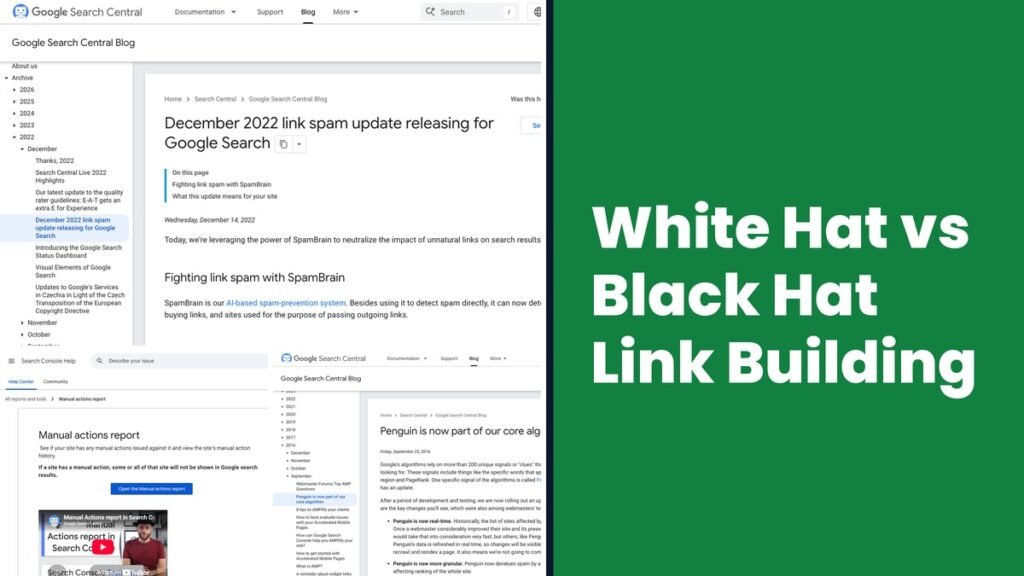
White hat link building earns links that an editor chooses to give, because your page is worth citing. Black hat link building manufactures links to manipulate rankings: buying links that pass ranking credit, running link networks or swapping links at scale. Google calls the second kind link spam and works to cancel it out.
The line is not always obvious, so this guide maps common tactics to what Google’s own policy says, covers the grey areas, and explains what happens to sites that cross it.
The Difference Between White Hat and Black Hat Link Building
The test is intent. Google defines link spam as creating links “primarily for the purpose of manipulating search rankings.” A link earned because someone found your content useful is white hat. A link that exists only because you paid, traded or automated it, without marking it as paid, is black hat.
Common Tactics Rated White, Grey or Black
| Tactic | Rating | Google’s position |
|---|---|---|
| Digital PR and journalist quotes | White | Editorial links, earned on merit |
| Guest post written for the host’s readers | White | Fine when it informs users |
| Broken link and mention outreach | White | Editor decides to link |
| Paid placement marked rel=”sponsored” | White | Allowed when qualified |
| Occasional mutual links between real partners | Grey | Only excessive exchanges are named |
| Paid post or niche edit passing ranking credit | Black | Buying links for ranking purposes |
| Keyword-anchor guest posts at scale | Black | Named as link spam |
| Private blog networks | Black | Buying links, automated links, cross-linking |
| Expired domains redirected for their links | Black | Expired domain abuse |
White Hat Link Building Tactics
These methods earn links Google wants to count, because an independent editor decides to publish each one:
- Digital PR: data stories and expert comment that earn news coverage. See digital PR for SEO.
- Editorial guest posts: genuinely useful articles for relevant sites, covered in our guest posting guide.
- Linkable assets: original research, tools and templates people cite.
- Broken link building: offering your page to replace a dead link.
- Unlinked brand mentions: asking sites that name you to add a link.
- Sponsored placements, properly marked: paid links carrying rel=”sponsored” or rel=”nofollow”.
For more ways to earn strong links within these rules, see how to get high authority backlinks.
Black Hat Tactics Google Names as Link Spam
Google’s link spam policy lists the practices it treats as manipulation. In plain terms:
- Buying or selling links that pass ranking credit, for money, goods or services
- Sending someone a free product in exchange for a post with a link
- Excessive link exchanges and partner pages made only for cross-linking
- Using automated programs or services to create links
- Requiring a link in terms of service or contracts without letting the owner qualify it
- Advertorials, guest posts or press releases carrying optimised anchor text
- Low-quality directory and bookmark links
- Keyword-rich or hidden links in widgets, footers and templates across many sites
- Forum comments and signatures with optimised links
Private blog networks are not named by that label, but they are built from several of these at once: paid links, automated linking and sites that exist only to link to each other. In March 2024 Google also added expired domain abuse to its spam policies, covering domains bought and repurposed mainly to manipulate rankings.
Grey Hat: Where the Rules Get Blurry
Some tactics are not black hat in themselves but become so with scale or payment:
- Link exchanges: two related businesses linking to each other once is normal. A pattern of trades is what Google lists.
- Niche edits: asking for a link in an existing article is outreach. Paying for one that passes ranking credit is buying a link.
- Expired domains: buying one to run a real site is fine. Buying one to redirect its links or exploit its old reputation is expired domain abuse.
If a tactic only works when nobody knows money changed hands, treat it as black hat.
What Happens When Black Hat Link Building Gets Caught
Google has fought link spam with algorithms for more than a decade. Penguin first launched in 2012 and, as Google confirmed on 23 September 2016, became part of the core algorithm, running in real time. On 14 December 2022 Google announced a link spam update that used its SpamBrain system to “neutralize the impact of unnatural links” and to spot sites that buy links or exist to pass them on.
Neutralised links stop helping, and Google says any ranking benefit they once gave is lost. Spam updates keep coming: Google rolled out four in 2026 alone, in March, June, August and September. Worse cases get a manual action for unnatural links, which can drop some or all of a site from results until it is fixed.
How to Recover From Unnatural Links
If Search Console shows a manual action for unnatural links to your site, Google’s recovery path is:
- Export your links from Search Console and review them for paid, traded or automated links.
- Ask site owners to remove those links or add rel=”nofollow” or rel=”sponsored”.
- Disavow the links you could not get removed, after a genuine removal effort.
- Submit a reconsideration request explaining what you removed and what you could not.
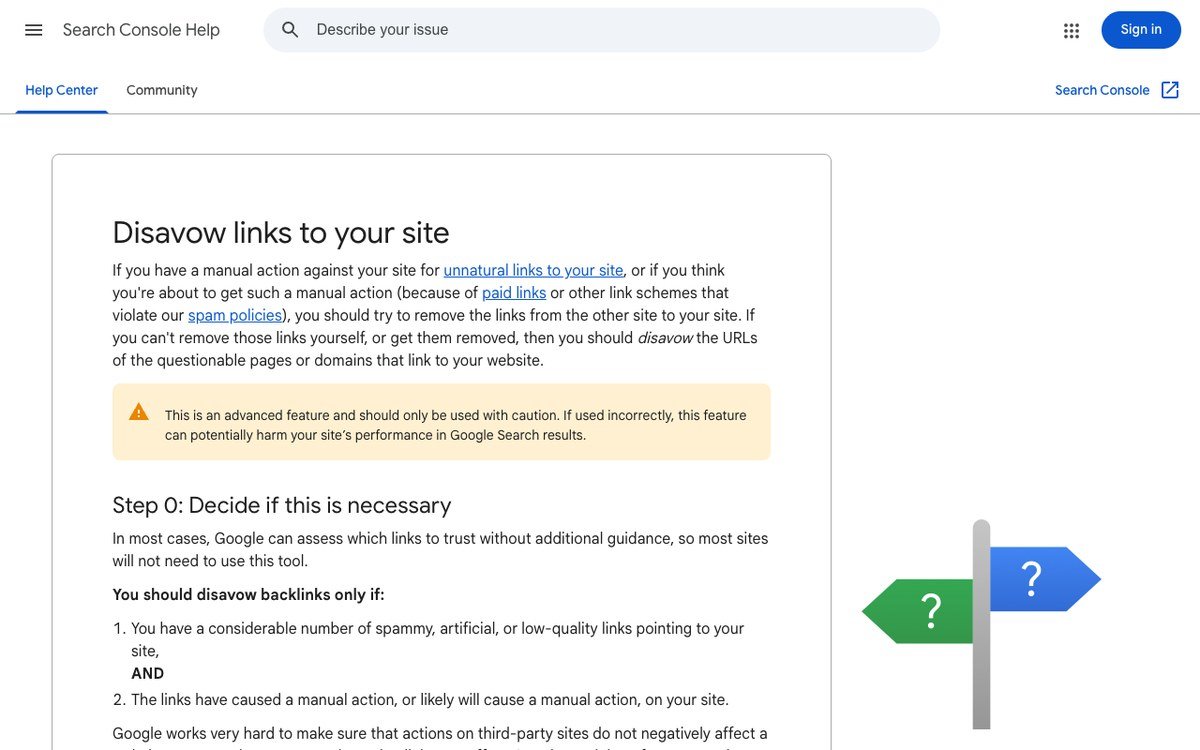
Google calls the disavow tool an advanced feature that most sites do not need, and warns that misuse can hurt performance. Use it only when you have many spammy links that have caused, or are likely to cause, a manual action. Our disavow file generator builds the file in the right format, and the anchor text distribution checker helps spot unnatural anchor patterns.
Our link building services use white hat methods only: no networks, and every publisher approved by you before outreach.
Frequently Asked Questions
Is guest posting white hat or black hat?
It depends on how it is done. A guest article written for the host’s readers on a relevant site is white hat. Guest posts placed at scale with keyword-rich anchors, or paid posts with links passing ranking credit, are link spam under Google’s policy.
Are paid links always black hat?
No. Google says buying links for advertising or sponsorship is fine when the link carries rel=”sponsored” or rel=”nofollow”. Paying for a link that passes ranking credit is what breaks the rules.
Do I need to disavow bad backlinks?
Usually not. Google says most sites do not need the disavow tool and that misuse can hurt performance. Use it only when bad links have caused, or are likely to cause, a manual action.
Can a site recover from a link penalty?
Yes. A manual action can be lifted after you clean up the links and submit a reconsideration request, which can take days or weeks to review. Rankings lost to neutralised links come back only by earning genuine links to replace them.
Related Articles

Ayush Shah
Ayush Shah is the founder of RankShifters.com, with a background in SEO, link building, content writing, and digital marketing. He works with businesses, startups, and agencies, and shares what he's learned about search and online growth.
Keep reading
Digital PR for SEO: How It Earns Links and Rankings
Digital PR for SEO explained: how press coverage earns links and mentions, the campaign types that work, pitching tips and how to measure it.
Read the guide →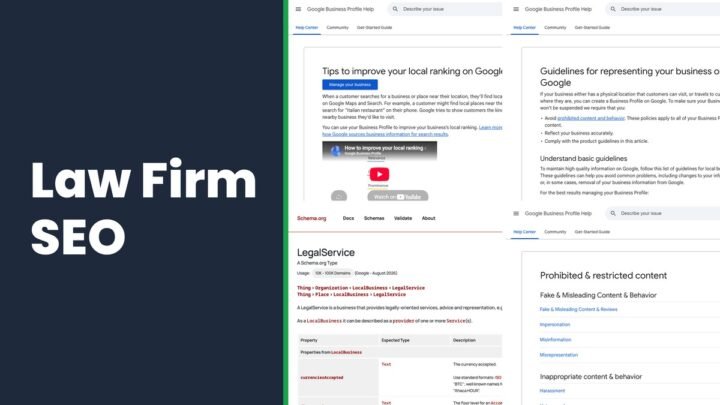
Law Firm SEO: How to Rank a Law Firm Website
How to rank a law firm website, step by step: Google Business Profile, site structure, practice area content, reviews, schema and links that stay ethical.
Read the guide →
SaaS Link Building: 8 Strategies That Earn Links
The link building strategies that work for SaaS companies, with real examples, the pages links should point to, and the tactics to avoid.
Read the guide →