AI Search Optimization: The Basics of GEO and AEO
A beginner's guide to AI search optimization: GEO and AEO, how AI answers choose sources, AI crawler controls, first steps and how to measure results.
-
Ayush Shah
- 6 min read
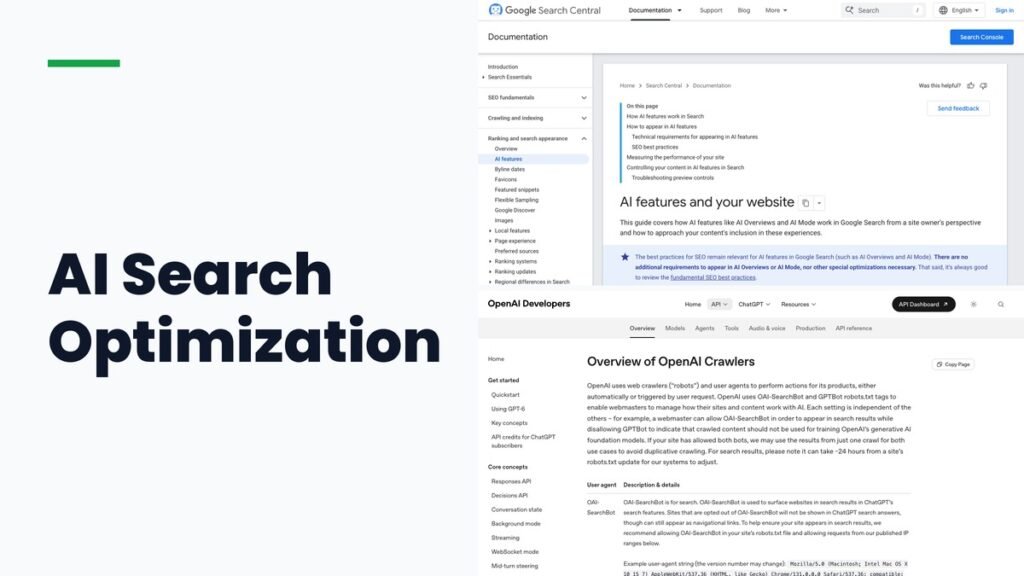
AI search optimization is the work of getting your content found, cited and recommended by AI-powered search: Google’s AI Overviews and AI Mode, ChatGPT, Perplexity, Copilot and Claude. Instead of only ranking a blue link, the aim is to be one of the sources an AI answer draws on and links to.
The audience is already large. Alphabet said in July 2026 that AI Mode had passed one billion monthly users. The good news for anyone doing SEO is that most of what works is familiar, and several popular tricks are not needed at all.
What Is AI Search Optimization?
AI search optimization means shaping your site and your wider web presence so that AI systems can find your pages, understand them and choose them as sources when they build an answer. It goes by several names that mean roughly the same thing:
- GEO (generative engine optimization): the term from a 2023 research paper on optimising content for generative search engines.
- AEO (answer engine optimization): making content easy for AI answers and assistants to pull from.
- LLMO (large language model optimization): the same idea framed around the models themselves.
Google’s own guidance, published in May 2026, puts it plainly: optimising for generative AI search “is optimizing for the search experience, and thus still SEO.” The GEO paper reported visibility gains of up to 40%, but that was the best case in the authors’ own benchmark, not a typical result.
How AI Search Picks Its Sources
AI answers are not written from memory alone. The system runs searches, retrieves pages and builds its answer on top of them. Google calls part of this query fan-out: AI Overviews and AI Mode may run multiple related searches across subtopics to assemble one response.
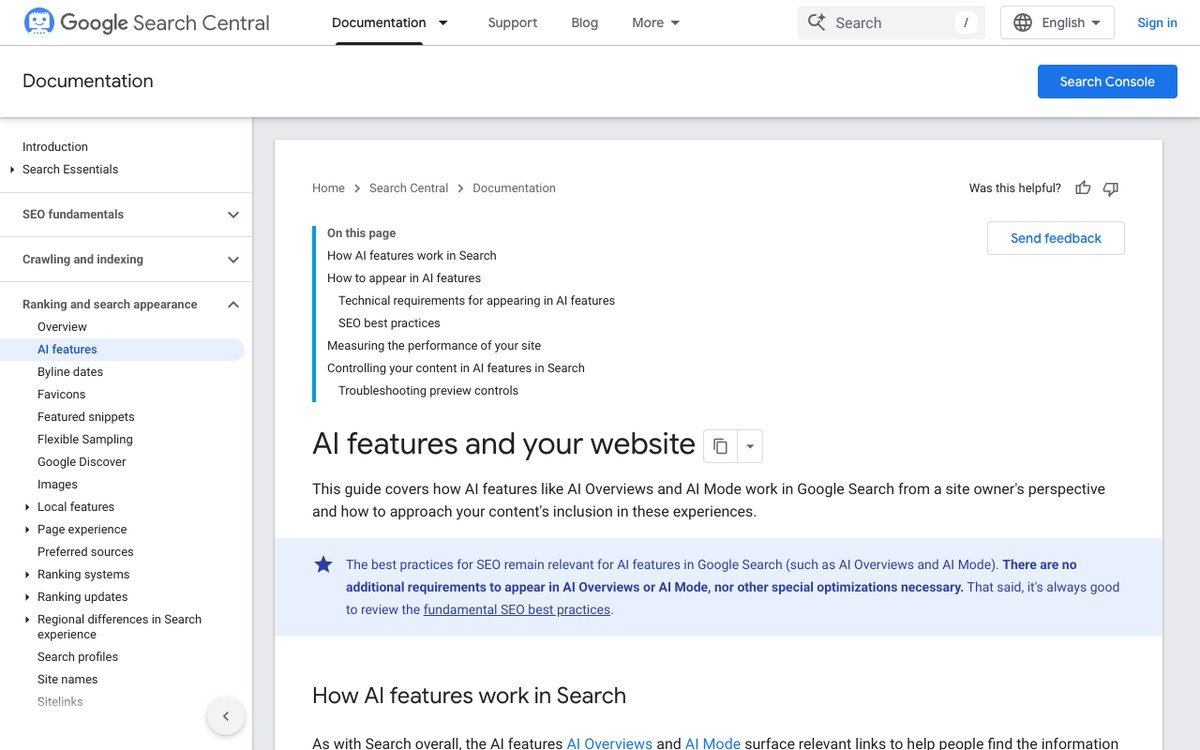
For Google, the entry ticket is ordinary. Its page on AI features and your website says there are no additional requirements to appear in AI Overviews or AI Mode. A page needs to be indexed and eligible to show a snippet, and inclusion is not guaranteed. Pages that already rank and answer the question well are the ones most likely to be cited. We break down the signals behind those citations in AI Overview ranking factors.
AI Search Optimization vs Traditional SEO
| Traditional SEO | AI search optimization | |
|---|---|---|
| Goal | Rank a page in the results | Be cited, linked or named in the answer |
| Unit | The whole page | A passage, a fact, or your brand |
| Off-site signal | Backlinks | Backlinks plus brand mentions |
| Success metric | Rankings, clicks | Citations, mentions, referral visits |
The click picture is different too. In Pew Research Center data from March 2025, Google users clicked a regular result in 8% of visits when an AI summary appeared, against 15% without one, and clicked a link inside the summary in just 1% of visits, per the Pew study. Being the cited source matters more when fewer people scroll past the answer.
Which AI Crawlers to Allow
Each AI company runs separate crawlers for search and for model training, and robots.txt treats them separately. Blocking the wrong one can remove you from AI answers without stopping training at all.
| Crawler | Company | What it controls |
|---|---|---|
| Googlebot | Search, including AI Overviews and AI Mode | |
| Google-Extended | Gemini training and grounding; no effect on Search | |
| OAI-SearchBot | OpenAI | Appearing in ChatGPT search answers |
| GPTBot | OpenAI | Training OpenAI’s models |
| PerplexityBot | Perplexity | Appearing in Perplexity results |
| Claude-SearchBot | Anthropic | Search results in Claude |
| ClaudeBot | Anthropic | Training Anthropic’s models |
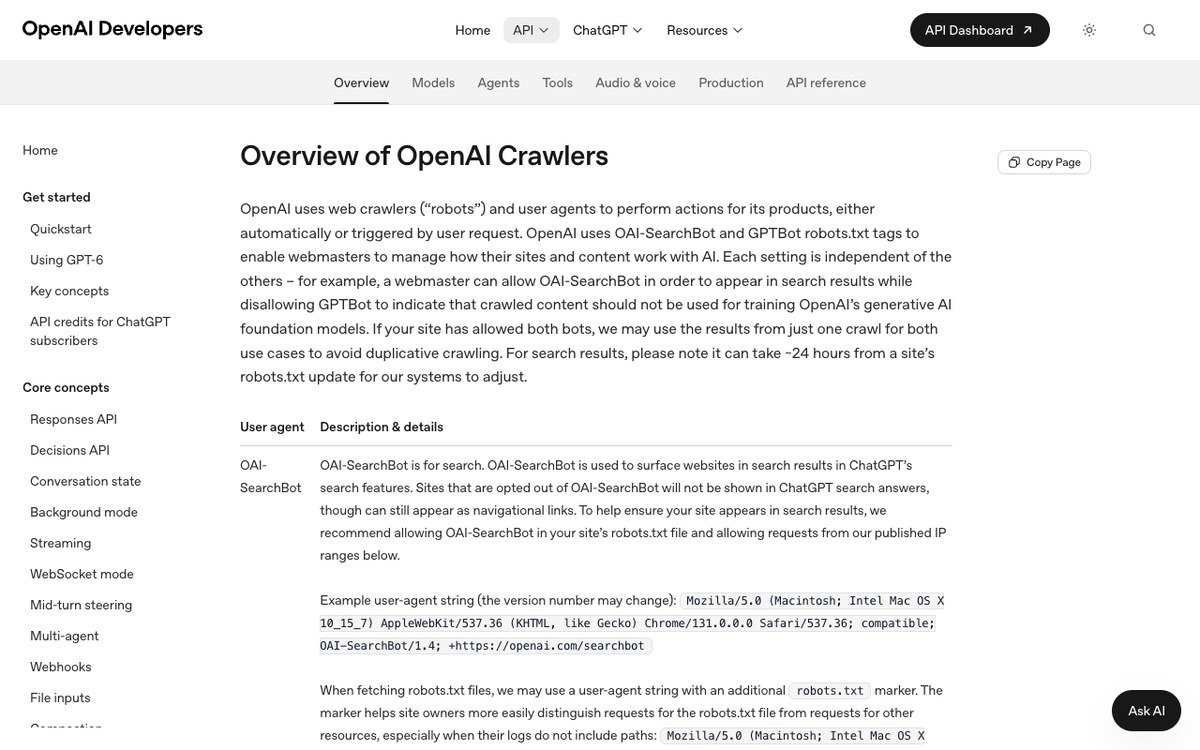
If you want to appear in AI answers, allow the search crawlers. Whether to allow the training crawlers is a separate business decision. Google spells out that Google-Extended does not affect inclusion in Search, and OpenAI’s crawler documentation notes that a site blocking OAI-SearchBot will not be shown in ChatGPT search answers.
7 AI Search Optimization Basics to Start With
- Make sure pages can be indexed and shown with a snippet. A noindex, nosnippet or blocked crawler takes you out of AI answers entirely.
- Answer the question early. Put a clear, direct answer under a heading that matches the question, then add the detail.
- Cover the follow-up questions. Fan-out searches look for subtopics, so pages that handle the next question get pulled in more often. Our query fan-out tool shows which subtopics a query expands into.
- Get your brand mentioned on trusted sites. Mentions in news, reviews and industry articles shape how AI describes you. Digital PR and brand mentions are the levers here.
- Show who is behind the content. Named authors, real experience and original data give AI systems a reason to trust and cite you.
- Keep facts current. Outdated prices, dates and figures are a reason for an AI answer to cite someone else.
- Keep building links. Links still help pages rank, and ranking pages are the pool AI answers draw from. See what link building is.
What You Can Skip
A lot of AI search advice adds work that does nothing. Google’s May 2026 guide covers the most common items:
- llms.txt files: Google says Search does not use them. In January 2026 John Mueller answered “to be direct, no” when asked if Google endorsed the format.
- Special schema for AI: no special structured data is needed to appear in AI features, though normal markup still helps rich results.
- Chopping content into chunks: Google says there is no need to split pages into small pieces for AI.
- An ideal word count: there is no target length for AI citations.
How to Measure AI Search Visibility
- Search Console: clicks and impressions from AI Overviews and AI Mode are counted in the Performance report under the Web search type.
- Analytics referrals: visits from chatgpt.com, perplexity.ai and similar sources show up as referral traffic in GA4.
- Prompt checks: ask the main AI tools the questions your customers ask and note whether you are named or linked, month by month.
If you would rather hand this over, our AI search optimization services cover crawler access, content and the mentions that feed AI answers.
Frequently Asked Questions
Is AI search optimization the same as SEO?
Mostly. Google describes optimising for its AI features as still SEO, since AI answers draw on pages that are indexed and rank. The extra focus is on clear answers, brand mentions across the web, and allowing AI search crawlers.
What is the difference between GEO and AEO?
They describe the same work. GEO comes from a 2023 research paper on generative engines, and AEO from the idea of optimising for answer engines. Neither term has a fixed definition.
Does llms.txt help AI search?
Not for Google. Google says its Search systems do not use llms.txt, so the file neither helps nor hurts how your pages appear in AI Overviews or AI Mode.
Should I block GPTBot?
Blocking GPTBot only opts your content out of OpenAI’s model training. It does not affect ChatGPT search, which uses OAI-SearchBot. Block GPTBot if you do not want your content used for training, but keep OAI-SearchBot allowed if you want to be cited.
Related Articles

Ayush Shah
Ayush Shah is the founder of RankShifters.com, with a background in SEO, link building, content writing, and digital marketing. He works with businesses, startups, and agencies, and shares what he's learned about search and online growth.
Keep reading

Digital PR for SEO: How It Earns Links and Rankings
Digital PR for SEO explained: how press coverage earns links and mentions, the campaign types that work, pitching tips and how to measure it.
Read the guide →
Law Firm SEO: How to Rank a Law Firm Website
How to rank a law firm website, step by step: Google Business Profile, site structure, practice area content, reviews, schema and links that stay ethical.
Read the guide →
White Hat vs Black Hat Link Building: What Google Allows
White hat vs black hat link building, mapped to Google's own link spam policy, plus the grey areas and how to recover from unnatural links.
Read the guide →