What Is Link Building? How It Works in SEO
Link building explained: what a backlink is, why Google counts it, earned vs built vs paid links, and how links fit into AI search.
-
Ayush Shah
- 7 min read
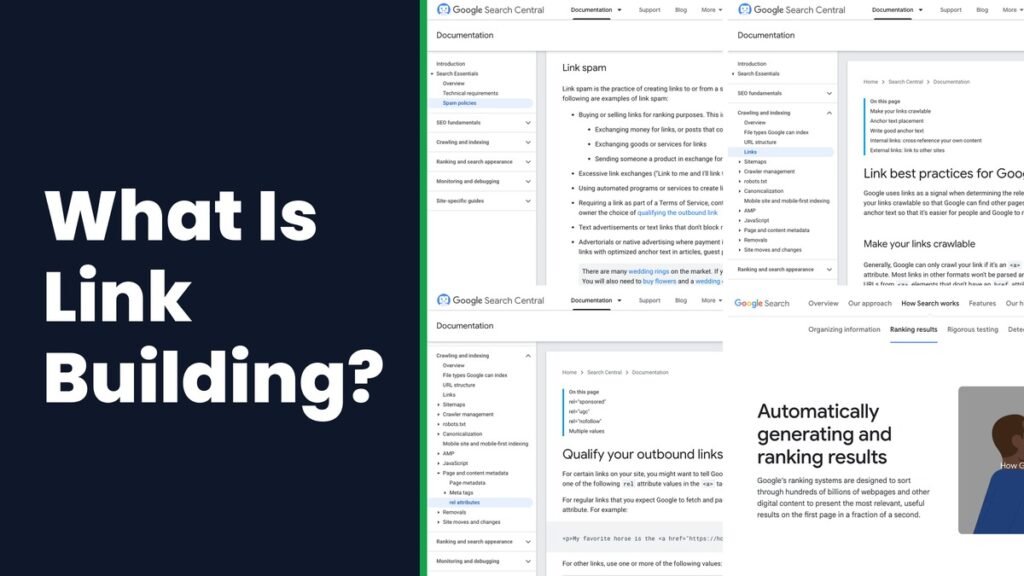
What is link building? It is the work of getting other websites to link to yours. Each of those links, called a backlink, tells search engines that another site found your page worth sending readers to, and that is one of the signals Google uses to decide which pages deserve to rank.
The hard part is that Google also treats links made only to move rankings as spam. Good link building sits between those two facts: it earns links that a real editor would have placed anyway, and it avoids the shortcuts that get a site penalised.
What Is Link Building in SEO?
Link building in SEO is the process of earning hyperlinks from other websites to pages on your own site, with the aim of improving how those pages rank. A link from a relevant, trusted site acts as a public reference. The more of those references a page collects from sites in its field, the stronger its case to rank.
In the page code, a link is an <a> element with an href attribute pointing at a URL. Google says it can reliably crawl that format, while links built only from JavaScript click handlers are a problem. The clickable words inside the tag are the anchor text, and Google reads them as a description of the page being linked to.
Links between pages on the same domain are internal links. Link building is about the external ones that point at you from other domains. We break down that difference in internal vs external links.
Why Backlinks Still Help Pages Rank
Links were the original idea behind Google. PageRank, the method Larry Page and Sergey Brin developed at Stanford in 1996, estimated how important a page was from the links pointing to it. The PageRank algorithm has changed beyond recognition since, but links never dropped out of the picture.
Google’s own explanation of ranking says its systems check whether other prominent websites link to or refer to a piece of content, and treat that as a sign the information is reliable. Links also do a plainer job: Googlebot finds new pages by following links from pages it already knows.
Links are one input among hundreds. A page with weak content will not hold a high ranking on links alone, and a page that answers the query better can outrank one with more backlinks.
Earned, Built and Paid: The Three Kinds of Links
Every backlink a site has arrived in one of three ways, and each one sits differently against Google’s rules.
| Type | How it happens | Where it stands with Google |
|---|---|---|
| Earned | Someone links to your page because it is useful: a study, a tool, a quote they needed | The kind of link Google wants to count |
| Built | You do outreach: pitching a guest article, suggesting a replacement for a broken link, offering a source to a journalist | Fine when an editor decides to publish it on merit |
| Paid | Money or goods change hands for the link | Allowed only when marked rel=”sponsored” or rel=”nofollow”; otherwise link spam |
Most real campaigns mix the first two. Outreach puts a good page in front of the people who might link to it, and the page itself has to be good enough that they choose to.
What Makes One Backlink Worth More Than Another
Ten links are not automatically better than one. These are the qualities that separate a link that moves rankings from one that does nothing:
- Relevance: a link from a site in your industry, on a page about your topic, carries more meaning than one from an unrelated blog.
- Editorial placement: a link inside the body of an article, where a writer chose to cite you, beats one in a footer, sidebar or author bio.
- The linking site’s own standing: a site that ranks, gets real traffic and is cited by others passes more trust than one nobody visits.
- Anchor text: Google asks for anchors that are descriptive, reasonably concise and relevant, and warns against stuffing keywords into them. Natural anchors vary.
- The rel attribute: links marked nofollow, sponsored or ugc tell Google not to treat them as an endorsement.
On that last point, Google introduced rel=”sponsored” and rel=”ugc” on 10 September 2019 and made all three values hints rather than strict commands, with nofollow becoming a crawling and indexing hint on 1 March 2020. Google’s guide to qualifying outbound links sets out when each one applies. “Dofollow” is not a Google attribute at all: it is shorthand for a link that carries none of the three.
Common Link Building Tactics
Most link building work falls into a handful of repeatable methods:
- Digital PR: pitching data, stories or expert comment to journalists so news coverage links back to you. See digital PR for SEO.
- Guest posting: writing an article for another site in your niche, with a link back inside it. Our guest posting guide covers the steps.
- Broken link building: finding dead links on other sites and offering your page as the replacement.
- Unlinked brand mentions: asking sites that already name your brand to turn the mention into a link.
- Linkable assets: original research, free tools and templates that people cite without being asked.
- Niche edits: getting a link added to an article that is already published and indexed.
Which mix works depends on your industry and budget. A full campaign usually combines two or three of these, which is how our link building services are scoped.
What Google Counts as Link Spam
Google’s spam policies define link spam as creating links “primarily for the purpose of manipulating search rankings.” The link spam section lists the practices it has in mind, including:
- Exchanging money for links, or for posts that contain links
- Excessive link exchanges (“link to me and I’ll link to you”)
- Using automated programs or services to create links to your site
- Keyword-rich anchor text in guest posts, articles or press releases placed on other sites
- Low-quality directory or bookmark site links
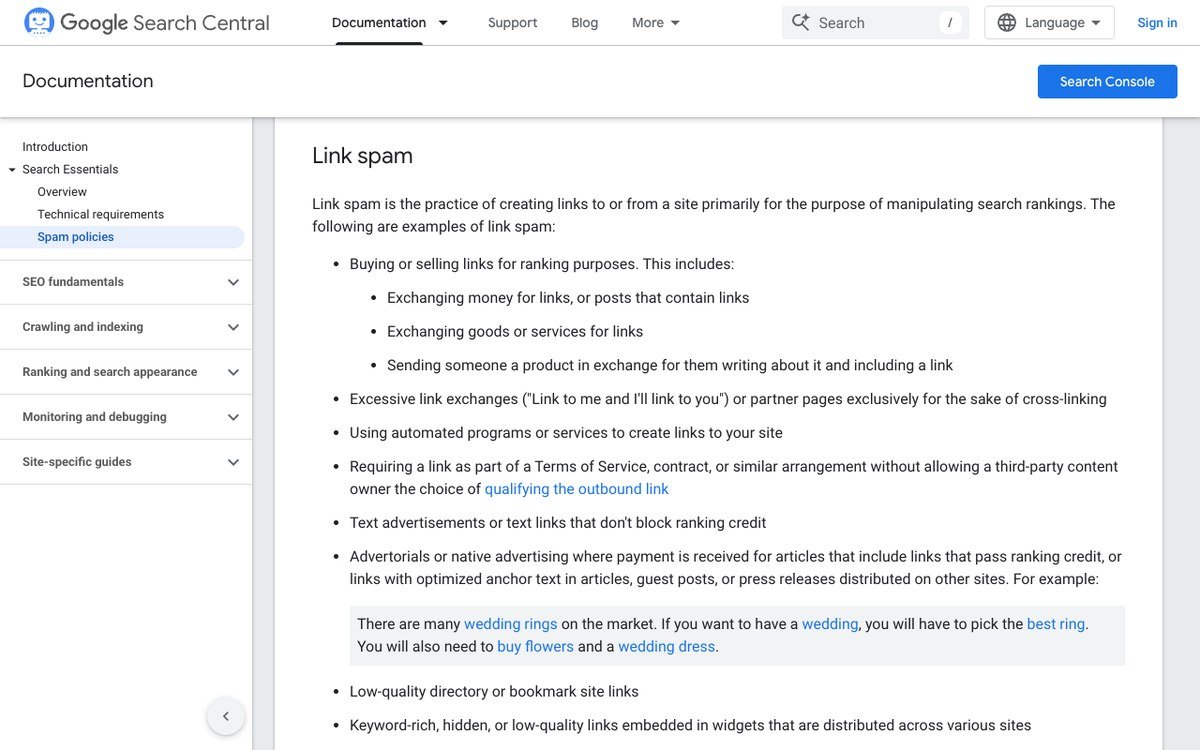
The same page is clear that paid links are not a violation in themselves if they carry rel=”sponsored” or rel=”nofollow”. The problem is a paid link dressed up as an editorial one. We set the two approaches side by side in white hat vs black hat link building.
Does Link Building Still Matter for AI Search?
Links still matter, but they are not the strongest signal for AI answers. An Ahrefs study of 75,000 brands, published 26 May 2025, measured how closely different signals tracked with visibility in Google’s AI Overviews:
- Branded web mentions: 0.664 correlation
- Domain Rating: 0.326
- Referring domains: 0.295
- Backlinks: 0.218
Mentions of your brand across the web tracked about three times more closely than raw backlink counts. That is correlation, not proof of cause, but it changes what a good campaign aims for: placements that get your brand named and discussed on trusted sites, not just a count of links. Our guide to brand mentions in SEO covers that side, and AI search optimization explains the rest of the picture.
How to Start Building Links
- Check what you already have. Run your domain through a backlink checker to see who links to you now and which pages attract links.
- Pick the pages that need links. Usually your key service, product or category pages, plus one or two pieces worth citing.
- Give people a reason to link. Original data, a tool, or a clearer answer than the pages already ranking.
- Find sites that cover your topic. Look at who links to your competitors and who writes about your industry.
- Reach out with something specific. A relevant article idea, a fix for a broken link, or a source for a story beats a generic request.
- Track every link you win. Record the URL, anchor and date, and check it stays live.
Frequently Asked Questions
Is link building still worth it?
Yes. Google’s own documentation still names links from prominent sites as a quality signal, and links are how its crawler discovers new pages. What has changed is the bar: one relevant editorial link does more than dozens of low-quality ones.
Is buying backlinks against Google’s rules?
Buying a link to influence rankings is link spam under Google’s policy. Paying for a placement is allowed if the link is marked rel=”sponsored” or rel=”nofollow”, which tells Google not to count it as an endorsement.
How long does link building take to work?
Expect weeks to months. Google has to recrawl the linking page before the link counts, and a page usually needs links from several relevant sites before its rankings move in a competitive search.
What is the difference between link building and digital PR?
Digital PR is one method of link building. It earns links through news coverage, while link building as a whole also includes guest posts, broken link outreach, niche edits and other tactics.
Related Articles

Ayush Shah
Ayush Shah is the founder of RankShifters.com, with a background in SEO, link building, content writing, and digital marketing. He works with businesses, startups, and agencies, and shares what he's learned about search and online growth.
Keep reading
Digital PR for SEO: How It Earns Links and Rankings
Digital PR for SEO explained: how press coverage earns links and mentions, the campaign types that work, pitching tips and how to measure it.
Read the guide →
Law Firm SEO: How to Rank a Law Firm Website
How to rank a law firm website, step by step: Google Business Profile, site structure, practice area content, reviews, schema and links that stay ethical.
Read the guide →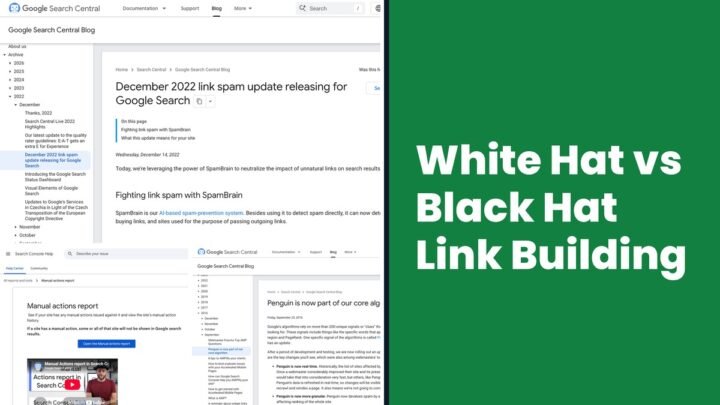
White Hat vs Black Hat Link Building: What Google Allows
White hat vs black hat link building, mapped to Google's own link spam policy, plus the grey areas and how to recover from unnatural links.
Read the guide →