9 Best Free Plagiarism Checker Tools
What a plagiarism checker reports, a table of nine tools with their free limits and paid prices, then each tool in turn with what its free scan includes.
-
Ayush Shah
- Updated October 27, 2026
- 13 min read
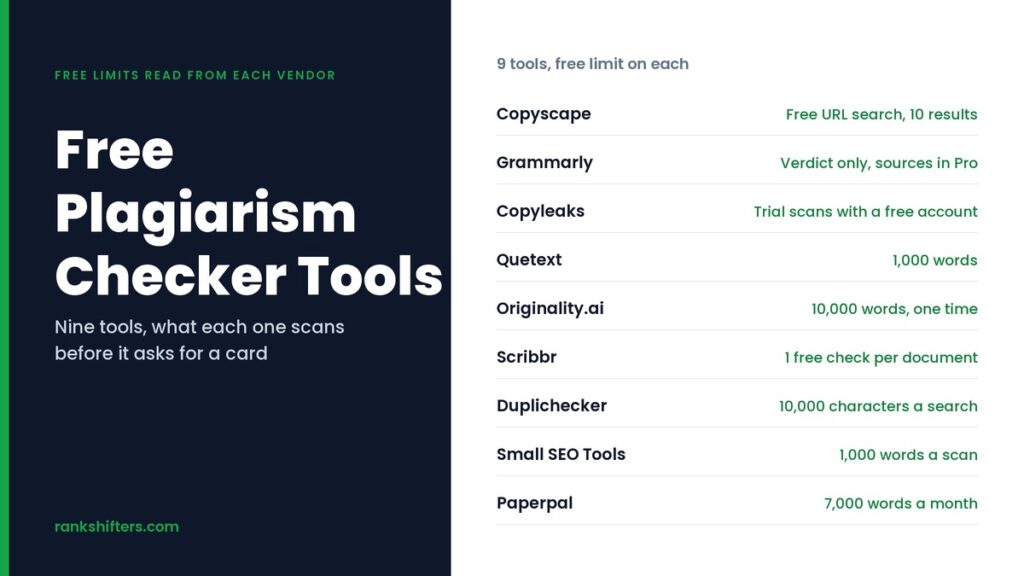
A free plagiarism checker shows whether a draft repeats text that already exists online before a client, an editor or Google notices. This guide explains what the checkers report, compares nine of them in one table, then goes through each tool with its free limit, what the free report includes and what the paid plan costs.
The tools differ far more on their free tiers than on their detection. One scans 7,000 words a month at no cost, one caps a scan at 1,000 words, one grants a single free check per document, and one returns only a found or not found verdict until you pay. Knowing the cap before you paste avoids the most common frustration, a draft cut off mid-scan.
What a Plagiarism Checker Reports
A plagiarism checker breaks your text into short phrases, looks each one up in an index of web pages (and in the academic tools, journal articles and earlier student submissions) and reports how much of the text matches something already published. Plagiarism itself, presenting someone else’s work as your own, is a question of attribution and intent; the checker cannot judge either, it only finds the overlap and leaves the citation decision to you.
Whichever tool you open, the report is built from the same handful of elements:
- Similarity score: the share of the text that matches indexed sources, usually after common phrases are filtered out
- Matching sources: the URLs or documents that contain the matched text, ranked by how much they share with yours
- Highlighted passages: the sentences that matched, so you can quote, cite or rewrite them one at a time
- Exact versus partial matches: word-for-word copies separated from paraphrased or synonym-swapped passages, which only some tools attempt
- AI detection: a separate probability score for machine-written text that several of these tools bundle in, which is a different task from matching
For a site owner the stakes are set by Google’s spam policies, which list copying content from other sites and republishing it with slight changes under scaled content abuse. Duplicate text inside your own site is a different problem: Google picks one canonical URL and consolidates the duplicates, so the fix there is a canonical tag or a merge rather than a rewrite.
Beyond the report itself, the tools separate on three things: how many words a free scan accepts, whether you need an account to see the sources, and what a paid plan costs once you need more. The table puts those side by side, and our free word counter tells you which cap a draft fits under before you paste it anywhere.
Free Plagiarism Checker Limits and Paid Prices for All 9
Paid prices are the entry plan for one user, shown per month; where a vendor only bills annually, the figure is the annual rate divided by twelve.
| # | Tool | Free limit | Paid from | Report shows |
|---|---|---|---|---|
| 1 | Copyscape | URL search, 10 results | 3c a search | Pages copying yours |
| 2 | Grammarly | Found or not found verdict | $12 / mo annual | Sources, originality score |
| 3 | Copyleaks | Trial scans with a free account | $13.99 / mo annual | AI and plagiarism in one report |
| 4 | Quetext | 1,000 words a scan | $14.99 / mo | Sources, colour-coded matches |
| 5 | Originality.ai | 10,000 words, one time | $12.95 / mo annual | Plagiarism, AI, quality score |
| 6 | Scribbr | 1 check per document | $19.95 a document | Risk level, top 5 matches |
| 7 | Duplichecker | 10,000 characters a search | $5 a week | Plagiarised %, sources |
| 8 | Small SEO Tools | 1,000 words a scan | $9.99 / mo | Exact and partial match % |
| 9 | Paperpal | 7,000 words a month | Prime plan | Score, top 3 matches |
9 Free Plagiarism Checker Tools Worth Using
Free limits change without notice, so confirm the cap on the tool page before a deadline depends on it.
1. Copyscape, the pay-per-search standard for published pages
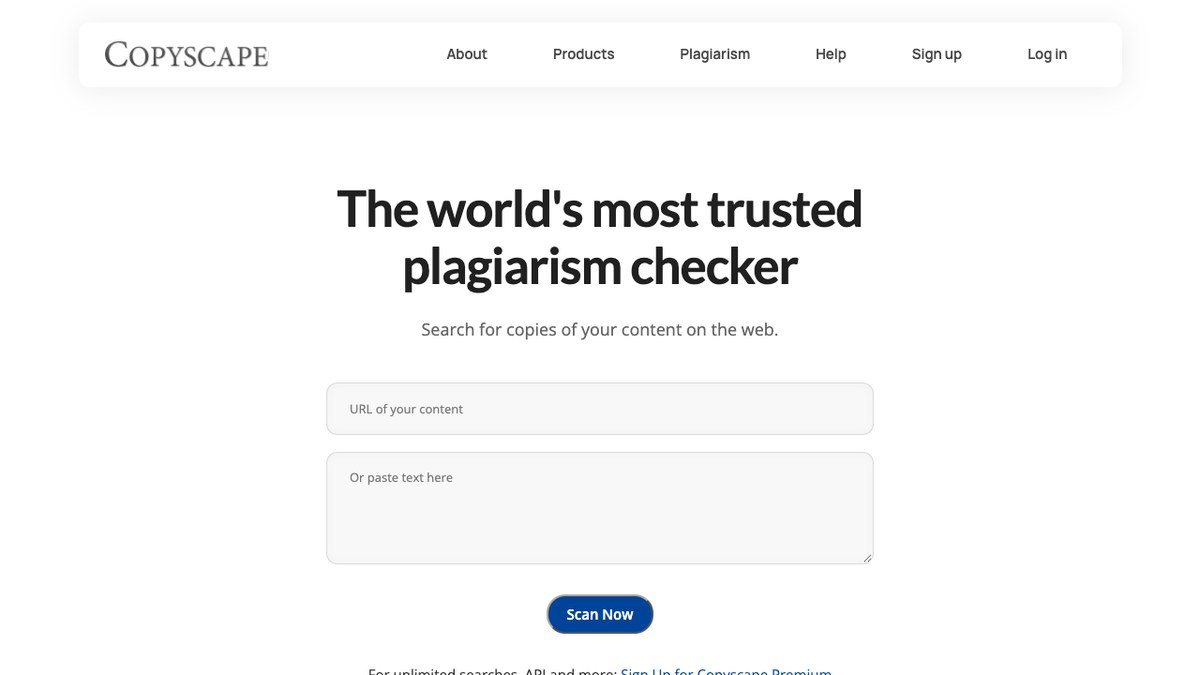
Copyscape has been the content industry’s reference check for more than two decades, and its model is unlike anything else here: no subscription, a few cents per search. The free service takes a URL only, finds pages that copy your published content and shows up to 10 results per search, with a cap on free scans per site that the service does not quantify.
Copyscape Premium is where the paste-text and file-upload checks live, at 3 cents per search for the first 200 words plus 1 cent for each additional 100 words, so a 1,500-word article costs 16 cents. Premium adds Batch Search for up to 10,000 pages from a URL list or sitemap, a private index of your own content at 1 cent per 1,000 words, an API and a WordPress integration.
- Free: URL search only, 10 results a search, limited scans per site
- Premium: 3c a search up to 200 words, 1c per extra 100 words, prepaid by card or PayPal
- Copysentry watches your pages for new copies: $4.95 a month for 10 pages checked weekly, daily checks from $19.95 a month
- Best for agencies and publishers checking content before it goes live; it is also the engine behind Jasper’s built-in plagiarism check
2. Grammarly, plagiarism checking inside the writing assistant
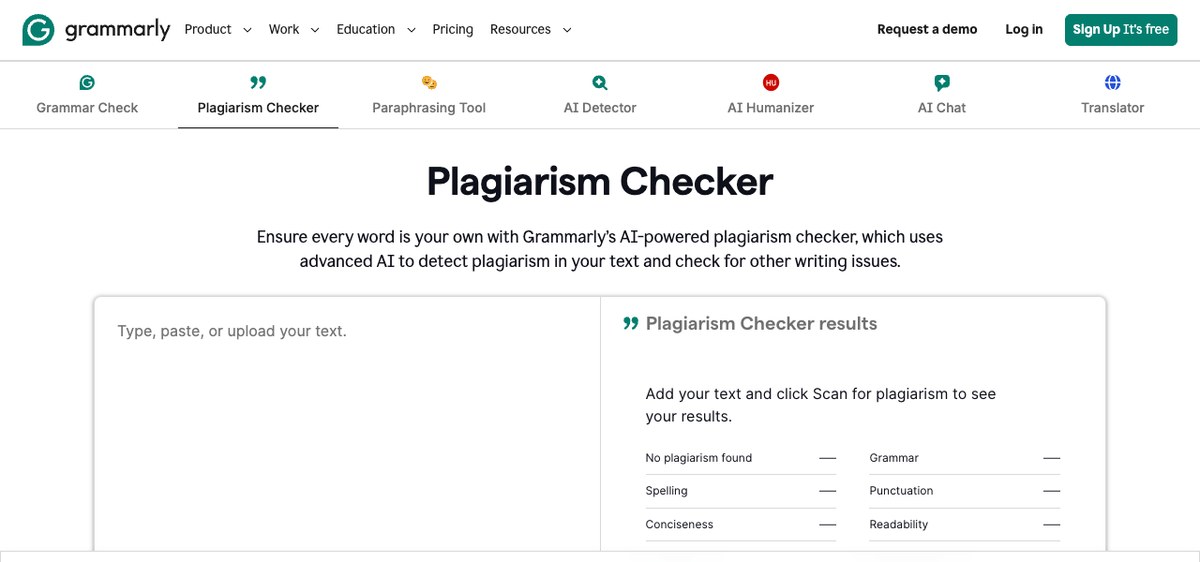
Grammarly’s checker compares text against more than 16 billion web pages and the academic papers in ProQuest’s databases, flags the matching sentences, lists the source for each and gives the document an originality score. The web page runs a scan without an account: paste or upload, and the results panel reports whether plagiarism was found alongside counts of grammar, spelling, punctuation and readability issues.
Highlighted passages, source references and citation suggestions sit in Grammarly Pro, which costs $12 per member per month billed annually ($144 a year), $60 a quarter or $30 billed monthly. Pro also puts the checker inside the editor, the browser extension and the desktop apps, so a draft is checked where it is written rather than pasted somewhere else.
- Free: a scan from the web page that reports whether matches were found, no account needed
- Pro: $12 a month billed annually, $30 monthly, with highlighted matches, sources and citation help
- Index: more than 16 billion web pages plus ProQuest academic databases
- Best for writers who already draft in Grammarly and want the check in the same editor
3. Copyleaks, plagiarism and AI detection in one report
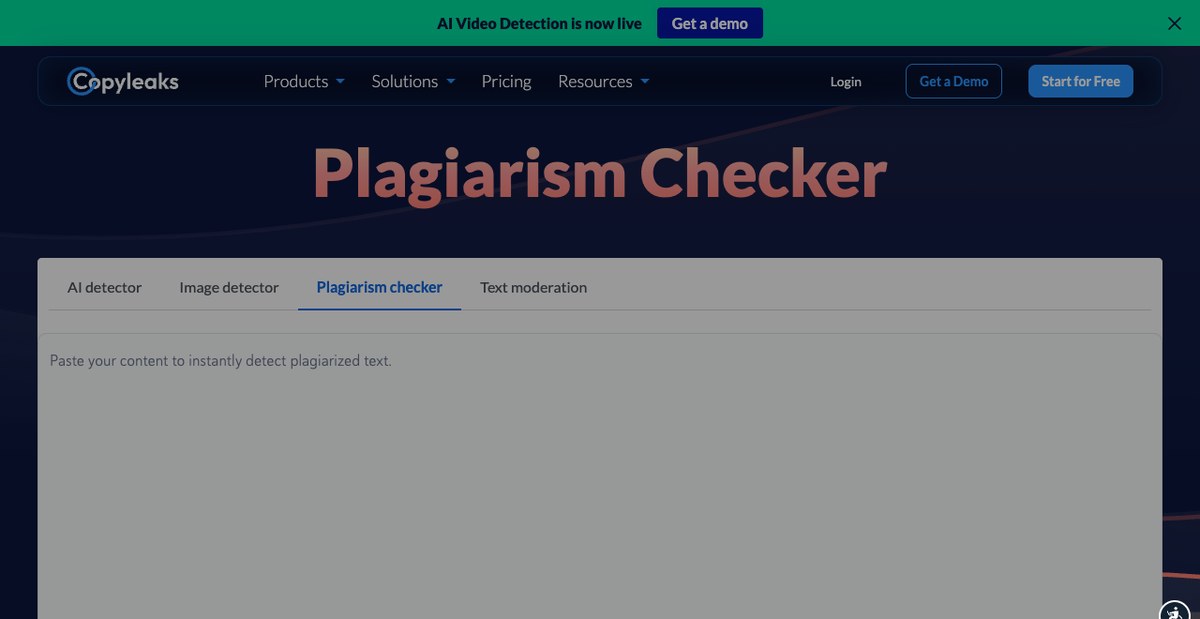
Copyleaks scans for AI-generated text and plagiarism in a single report, with plagiarism detection in more than 100 languages and AI detection in more than 30. It is the enterprise and education option in this list, with LMS integration, an API, a browser extension and a Google Docs add-on, and the paid tiers are priced in credits rather than scans.
The Personal plan costs $13.99 a month billed annually ($167.88 a year) for 1,200 unified credits, enough for 300,000 words or 1,200 images. Pro is $74.99 a month billed annually ($899.88) with 25 user seats, 12,000 credits for 3,000,000 words, whole-website scanning and cross-language detection. A free account lets you try the checker, with the allowance set inside the account rather than on the pricing page.
- Free: trial scans after registering for a free account
- Personal: $13.99 a month on annual billing, 300,000 words a month; extra credits can be bought at any time
- Pro: $74.99 a month on annual billing, 25 seats, 3,000,000 words a month, scan entire websites
- Best for teams that need AI detection and plagiarism matching in one report, and for schools running an LMS
4. Quetext, 1,000 free words through DeepSearch
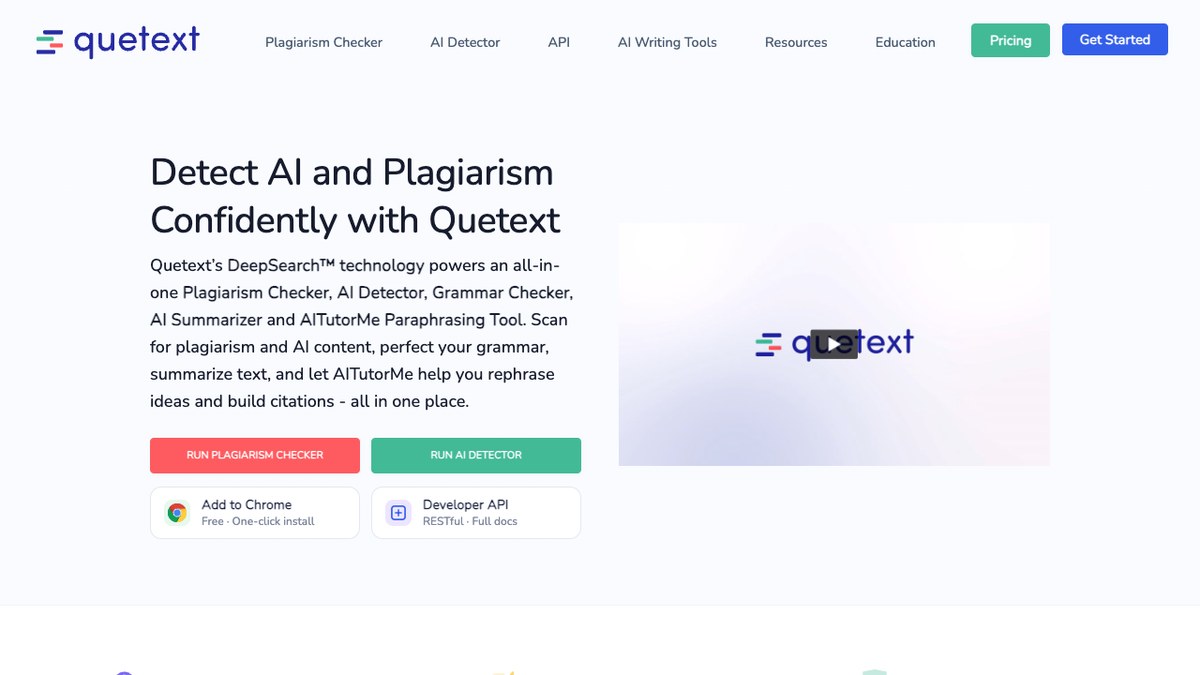
Quetext’s free plan scans up to 1,000 words through its DeepSearch plagiarism checker and another 1,000 through its AI detector, with a 2,000-word summarizer and a 500-word humanizer alongside. Reports highlight matches with colour-coded sources, and the report history stays in the account dashboard, so a rewrite can be compared against the first scan.
Essential costs $14.99 a month billed monthly for 100,000 words a month of plagiarism and AI checking, bulk uploads of 20 files and API access. Professional is $29.98 a month for 200,000 words, 100-file bulk uploads and a remarks tool for leaving feedback, which is the tier aimed at teams and schools. Both cover 17 or more languages and can be cancelled at any time.
- Free: 1,000 words a scan on the plagiarism checker and 1,000 on the AI detector
- Essential: $14.99 a month, 100,000 words; Professional: $29.98 a month, 200,000 words
- Free Chrome extension, bulk upload on paid plans, citation generator and paraphraser bundled
- Best for a 1,000-word post or essay checked at no cost, and the simplest paid upgrade for a small content team
5. Originality.ai, 10,000 free words for publishers
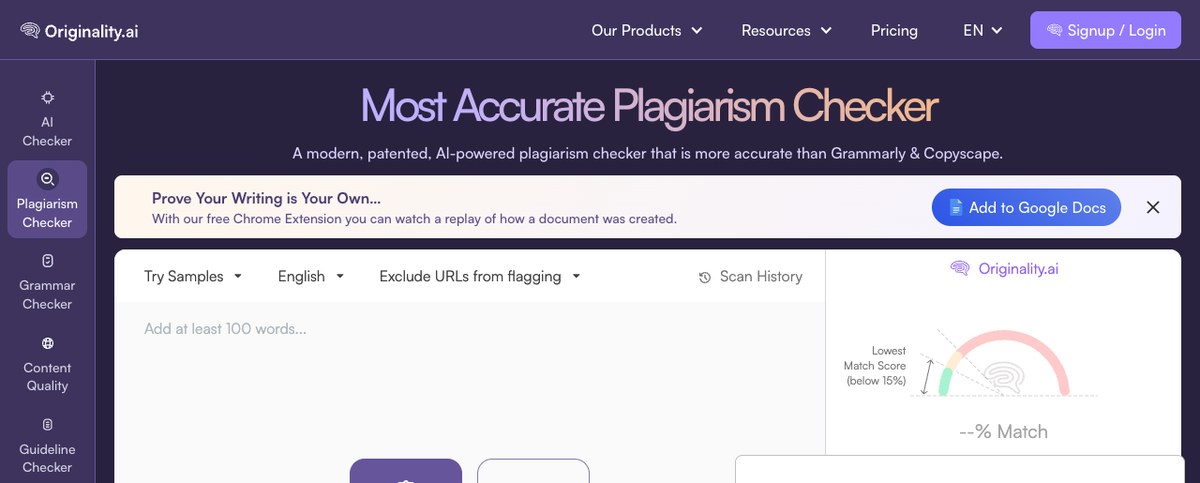
Originality.ai is built for people who buy content rather than write it: publishers, agencies and editors checking freelance submissions before payment. The free plan needs no subscription and gives 100 credits once, which at 100 words a credit is 10,000 words, and it unlocks the whole toolset: AI checker, plagiarism checker, content quality score, grammar and readability checks, a guideline checker and a fact and hallucination check.
Pro is $12.95 a month on annual billing for 2,000 credits a month (200,000 words), with additional team seats at $8.62 a month, and Enterprise is $136.58 a month for 15,000 credits (1.5 million words). The plagiarism checker flags patchwork and paraphrased copying as well as word-for-word matches, and a free Chrome extension records a writing replay that shows how a Google Doc was produced.
- Free: 100 credits (10,000 words) one time, no card, every feature included
- Pro: $12.95 a month billed annually, 200,000 words a month; Enterprise $136.58 a month, 1.5 million words
- One scan covers plagiarism, AI detection and a content quality score, with sentence-level results
- Best for editors checking paid freelance work and for agencies scanning a batch of articles before delivery
6. Scribbr, a per-document check on university-grade software
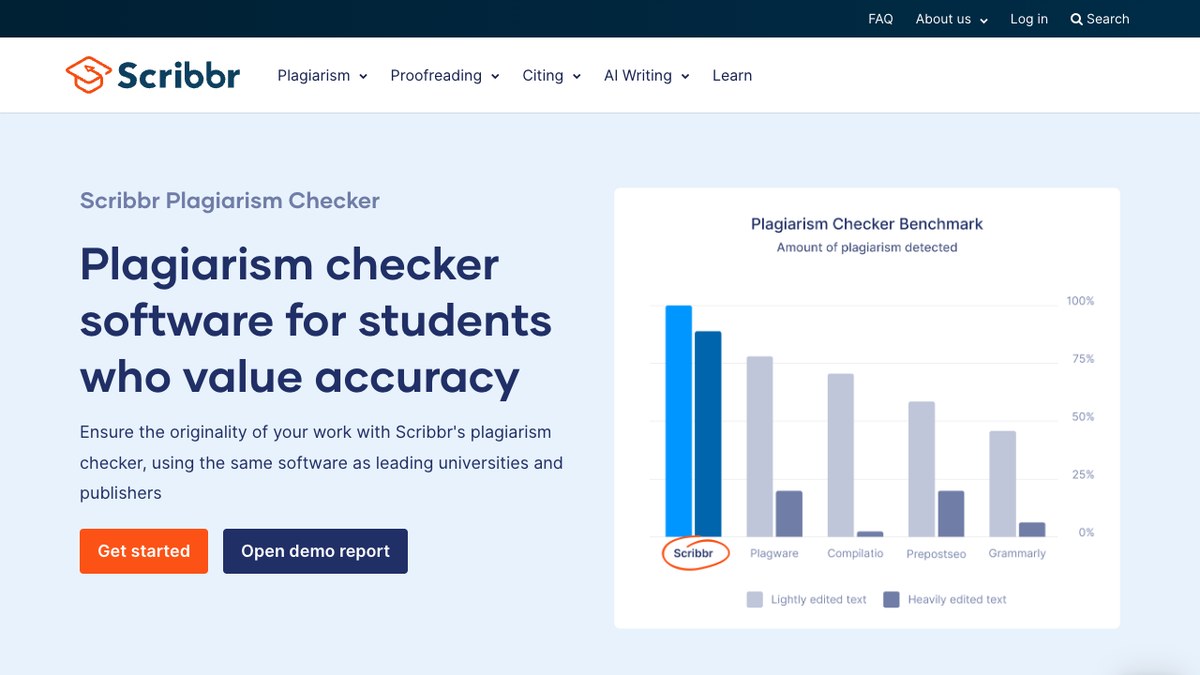
Scribbr runs its checker on the same detection software that universities use, and sells it per document instead of by subscription. The free check highlights similarities, shows the five closest matches to your text, rates the risk of plagiarism as low, moderate or high and adds an AI-content estimate, but each document gets one free check only.
The premium report costs $19.95 for a document up to 7,499 words, $29.95 from 7,500 to 49,999 words and $39.95 above that, and it adds the exact similarity percentage, the complete match list, a side-by-side comparison with the original and a Word download with the grammar corrections tracked. Submissions are never added to Scribbr’s database, which matters to students whose work will be checked again by their institution.
Scribbr positions the tool for students rather than copywriters, SEOs or business owners, and that is fair: it is an academic tool priced for a thesis, not a blog.
- Free: one check per document with a risk level, highlighted matches and the five closest matches
- Premium: $19.95, $29.95 or $39.95 per document by length; no subscription
- Self-plagiarism check by uploading earlier assignments, with APA, MLA and Chicago citations built into the report
- Best for a dissertation or admissions essay; the wrong tool for a freelancer’s blog post
7. Duplichecker, 10,000 characters a search with no account
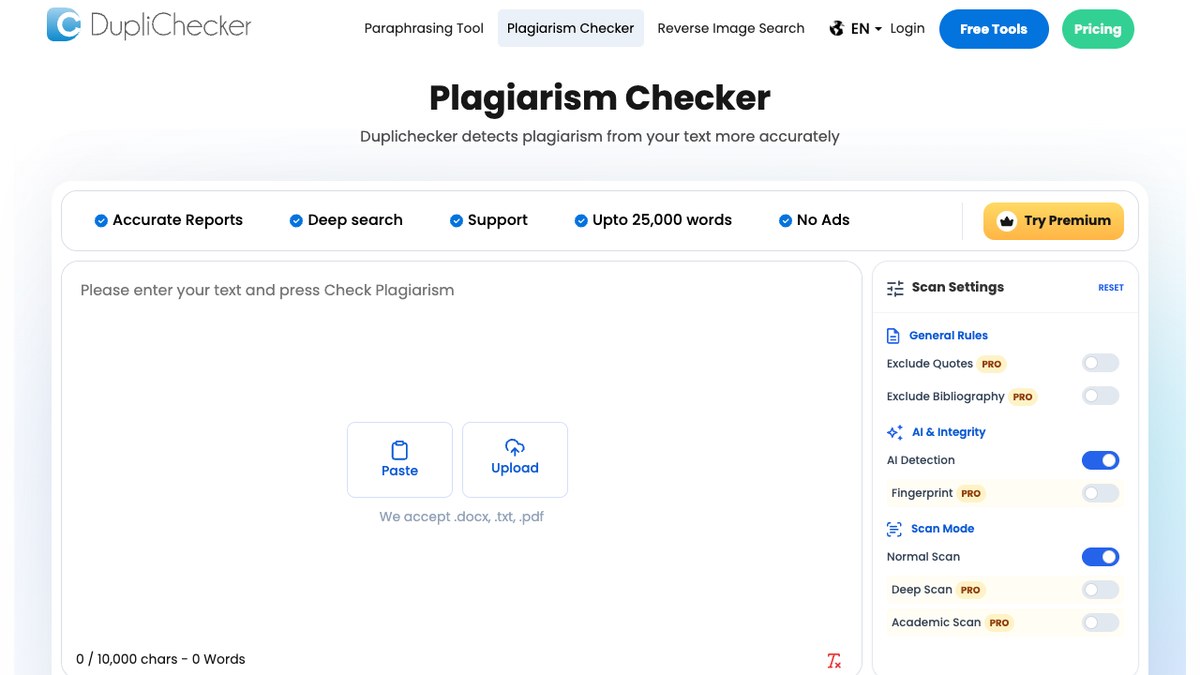
Duplichecker is the quickest no-account option: paste or upload a .docx, .txt or .pdf, press Check Plagiarism, and the box accepts 10,000 characters a search without registration. The report splits the text into plagiarised and unique percentages, lists the matching sources with their sentences and can be saved as a PDF, and a URL mode checks a published page instead of pasted text.
Premium removes the ads, raises the cap to 25,000 words a search, runs a deeper search and adds scan settings that exclude quotes and bibliography entries. Plans are sold by the week, month or year and start at $5 a week, which suits a one-off project better than a standing subscription.
- Free: 10,000 characters a search, no registration, file upload and URL check included
- Premium: from $5 a week, 25,000 words a search, no ads, exclude quotes and bibliography
- Report: plagiarised and unique percentages with sources and a downloadable PDF
- Best for a quick check of a short article when you do not want another account
8. Small SEO Tools, exact and partial matches on 1,000 free words
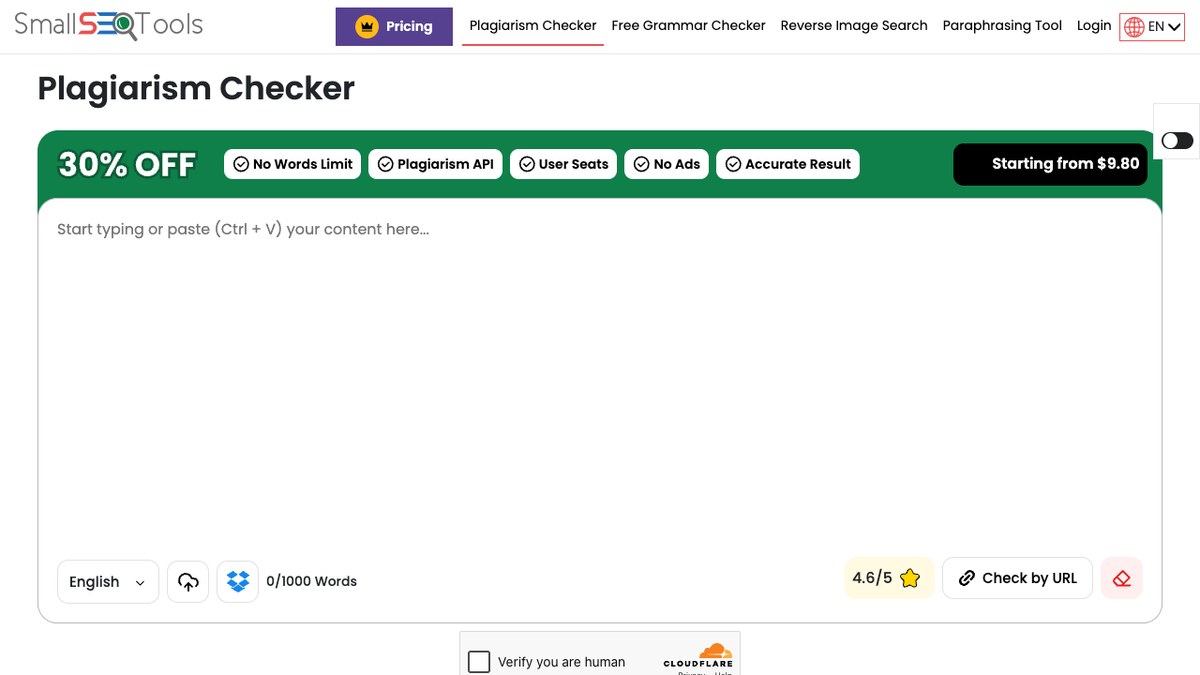
Small SEO Tools scans 1,000 words at a time on the free tier with no limit on how many scans you run, and separates the result into two panels: exact match for word-for-word copies and partial match for passages that share wording with a source without copying it outright. That split is useful when editing, because the two problems need different fixes.
Premium costs $9.99 a month billed monthly for 40,000 words plus an 8,000-word bonus, or $119.88 a year for 480,000 plus 96,000 words, and 300 words count as one query. Paid plans add a plagiarism API, a WordPress plugin, extra user seats and an ad-free interface, and the checker also runs by URL and from an uploaded file.
- Free: 1,000 words a scan, unlimited scans, check by URL or file
- Premium: $9.99 a month (48,000 words) or $119.88 a year (576,000 words)
- Results split into exact match and partial match percentages with sources
- Best for SEO writers who want a free second check on a long post, scanned in 1,000-word blocks
9. Paperpal, 7,000 free words a month for researchers
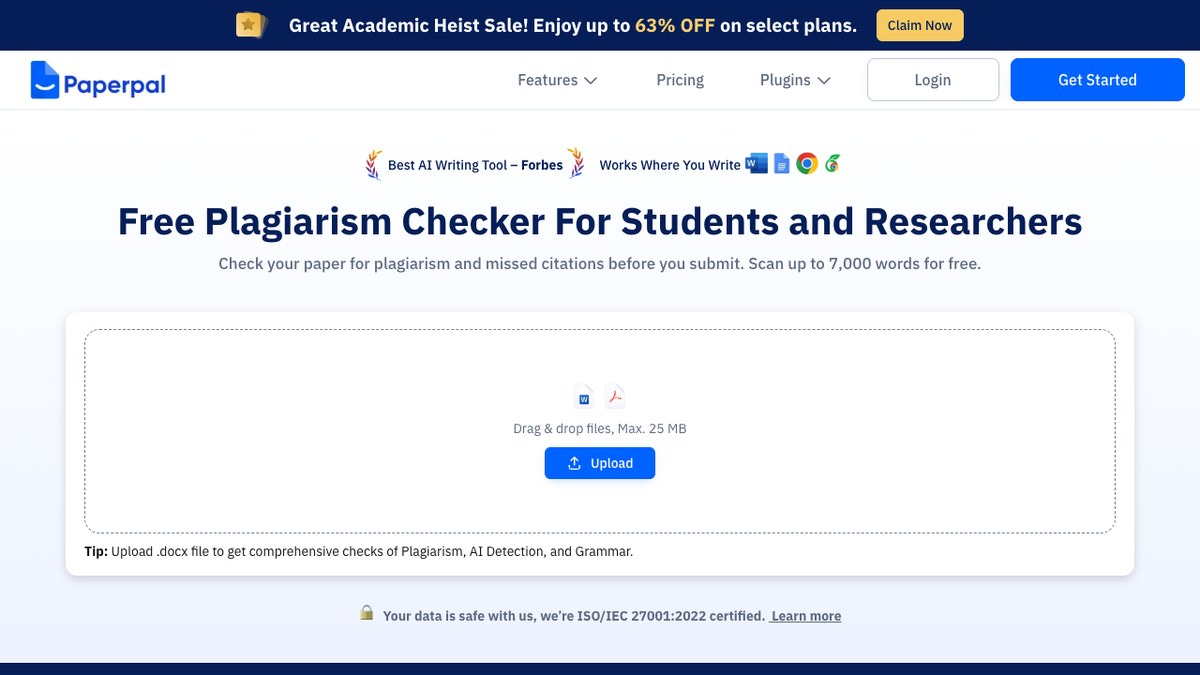
Paperpal gives the largest recurring free allowance in this list: 7,000 words a month, with no credit card. The free report returns an overall similarity score and the three closest matches, which is enough to know whether a paper has a problem but not enough to fix every passage; the full match list comes with the paid plans.
Prime raises the plagiarism cap to 10,000 words a month and Pro to 30,000, with add-ons for more, and both bundle Paperpal’s academic writing tools: language edits, an AI detector, citation lookup and a journal-fit check. It is aimed at students and researchers preparing a manuscript, and that is where its database and its report design make the most sense.
- Free: 7,000 words a month, an overall score and the three closest matches
- Prime: 10,000 words a month of plagiarism checks; Pro: 30,000 words, plus paid add-ons
- Bundled with grammar edits, AI detection, citation lookup and journal recommendations
- Best for a thesis chapter or journal submission checked monthly at no cost
Frequently Asked Questions
What is the best free plagiarism checker?
It depends on how much text you need to check and how often. Paperpal allows the most free words a month at 7,000, Originality.ai gives 10,000 words once with every feature included, and Duplichecker is the quickest with no account at 10,000 characters a search. Quetext and Small SEO Tools each take 1,000 words a scan, and Copyscape is the one to use when the question is who has copied a page you already published.
Which plagiarism checker do universities use?
Most institutions license Turnitin, which compares submissions against student papers, publications and more than 20 years of web content and is sold to schools rather than individuals. Scribbr runs its per-document checker on the same software, which is why students who want that grade of report before submitting use it, and Copyleaks and Quetext both sell education tiers with LMS integration.
Can a plagiarism checker detect AI-generated text?
Not as part of the plagiarism scan. Matching finds text that already exists somewhere, while AI detection estimates the probability that text was machine-written, and a wholly AI-generated paragraph can pass a plagiarism check with a zero score because it copies nothing. Copyleaks, Quetext, Originality.ai, Scribbr and Paperpal bundle a separate AI detector and Grammarly offers one as a separate tool, so treat the two scores as answers to two different questions.
How much similarity is acceptable?
There is no universal threshold, because quotes, references, product names and standard phrases all register as matches. Read the highlighted passages rather than the headline percentage: a 15 percent score made of cited quotations is fine, while 5 percent built from one lifted paragraph is not. Two near-identical pages on your own site are a different case: merge them or point one at the other with a canonical tag rather than rewriting either.
Check Before You Publish, Not After
A plagiarism checker is cheapest at the draft stage, when a flagged paragraph costs a rewrite rather than a takedown, a lost client or a page Google treats as copied. Run a free scan on every outsourced article before it is paid for, keep one web-wide scanner in the workflow, and confirm the free limits on the tool page when a deadline depends on them. If the writing itself is the bottleneck, our content writing services deliver articles that have already been through that check.
Also read:

Ayush Shah
Ayush Shah is the founder of RankShifters.com, with a background in SEO, link building, content writing, and digital marketing. He works with businesses, startups, and agencies, and shares what he's learned about search and online growth.
Keep reading
Best SEO Companies in Vancouver: 5 Agencies Compared
Five Vancouver SEO companies compared on office, trading history and focus, covering downtown consultancies, local search specialists and Burnaby teams.
Read the guide →
Best SEO Companies in Singapore: 6 Compared
Six Singapore SEO companies compared on office, trading history, client numbers and awards, including which of them support EDGE grant funding for SMEs.
Read the guide →
Best SEO Companies in the USA: 6 Compared on Scale
Six US SEO companies compared on headquarters, client count, specialism and published results, from Irvine and Las Vegas to York and Arlington.
Read the guide →