Google now recommends 304 to save crawl budget
-
Ayush Shah
- 2 min read

What this guide covers
Google has updated its crawl‑budget documentation to explicitly advise websites to return a 304 Not Modified HTTP status code when a page has not changed since it was last crawled.
What a 304 Not Modified response does
A 304 Not Modified response tells search engines and browsers that the requested resource is unchanged, so there is no need to resend the full content. Instead of delivering the entire HTML again, the server sends a lightweight 304 response along with updated cache information, allowing the crawler to reuse its cached copy of the page.
Why this helps your site’s crawl efficiency
When unchanged pages return 304 instead of 200 with full content:
- The server uses less bandwidth and processing power for each crawl.
- Search engines can allocate their limited crawl capacity to other, more important or recently updated pages on the site.
- Overall crawl efficiency improves, which is especially valuable for large or frequently crawled websites.
In Google’s updated guidance, the recommendation is clear: if a page hasn’t changed since the last crawl, respond with 304 so the cached version can be reused, conserving server resources and crawl budget.
How 304 works in practice
When crawling a URL, Googlebot may send conditional request headers such as If-Modified-Since, indicating when it last fetched the page. The server can then:
- Check whether the content has changed since that time.
- If it has not changed, respond with 304 Not Modified and omit the page body.
- If it has changed, respond with 200 OK and deliver the updated content.
Sites can also be configured to return 304 whenever they know a page is unchanged, even without relying strictly on conditional headers.
What this means for SEO
A 304 status is not an error and does not negatively affect rankings. It simply signals that the page is still valid but unchanged, so the crawler can skip re‑downloading it and focus on fresh or higher‑priority URLs. Proper use of 304 helps preserve crawl budget and server resources without harming SEO.
Also read:

Ayush Shah
Ayush Shah is the founder of RankShifters.com, with a background in SEO, link building, content writing, and digital marketing. He works with businesses, startups, and agencies, and shares what he's learned about search and online growth.
Keep reading
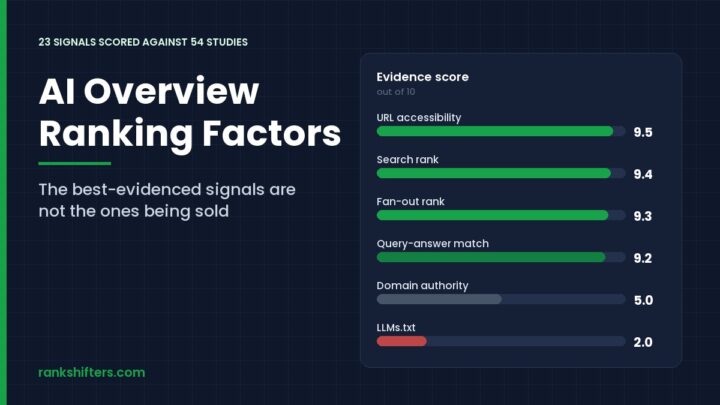
AI Overview Ranking Factors: 23 Signals, Ranked
AI Overview ranking factors are not a separate ruleset bolted on top of search. Google builds the answer box from pages already in its index, then…
Read the guide →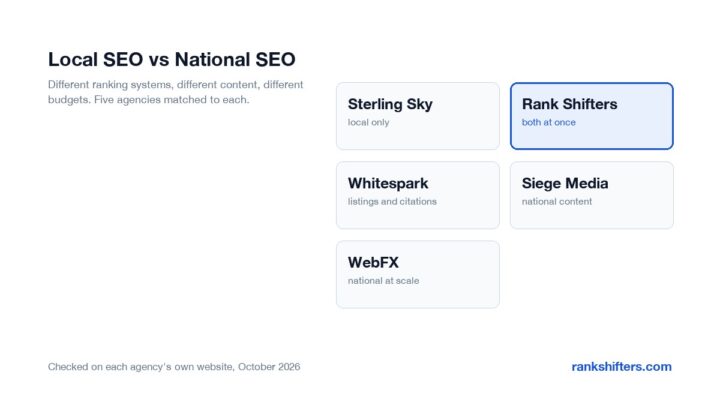
Local SEO vs National SEO: Which One Do You Need?
How local SEO and national SEO differ in ranking factors, content, link building, cost and timeline, and how to tell which one your business actually needs.
Read the guide →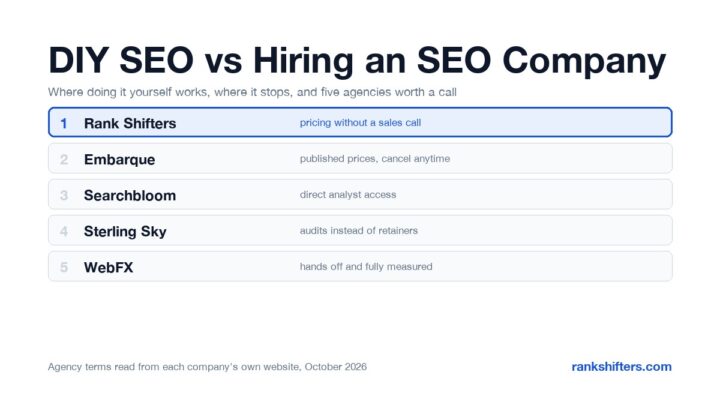
DIY SEO vs Hiring an SEO Company: How to Decide
A practical comparison of doing SEO yourself against hiring an agency, covering real costs, the time it takes, where DIY hits a ceiling, and five agencies…
Read the guide →